Portigo Global Home

Category

Supply Chain Strategy

19 articles

Cold Chain, Warm Margins: Why US Pharma Exporters Are Paying a Premium for Compliance Theater

Cold Chain, Warm Margins: Why US Pharma Exporters Are Paying a Premium for Compliance Theater

US pharmaceutical and perishable goods exporters are absorbing enormous cold chain costs they rarely scrutinize — from redundant monitoring technology to duplicative certifications across overlapping regulatory regimes. Meanwhile, competitors operating out of Mexico and Portugal have systematically stripped those costs away. The margin gap is widening, and most US exporters have yet to notice.

The Cost Nobody Budgeted For: How Reverse Logistics Is Quietly Eroding US Importer Margins

The Cost Nobody Budgeted For: How Reverse Logistics Is Quietly Eroding US Importer Margins

US importers routinely build detailed cost models for inbound freight—yet few account for the full financial weight of goods flowing in the opposite direction. Reverse logistics expenses, from return transportation and restocking to repatriation and disposition, can rival or surpass original landed costs. Understanding where that margin disappears is the first step toward recovering it.

Freight Dollars Hidden in Plain Sight: The Consolidation Economics US Importers Refuse to Master

Freight Dollars Hidden in Plain Sight: The Consolidation Economics US Importers Refuse to Master

Most US importers treat less-than-container-load shipments as an unavoidable cost of doing business rather than a lever for strategic savings. A closer look at how experienced traders are exploiting consolidation windows, regional hub networks, and shipping cycle timing reveals an 8–15% freight cost recovery that the majority of importers are systematically leaving uncaptured.

Compliant on Paper, Exposed in Practice: The Hidden Sanctions Risk Buried in Your Extended Supply Chain

Compliant on Paper, Exposed in Practice: The Hidden Sanctions Risk Buried in Your Extended Supply Chain

US companies investing heavily in direct sanctions compliance may still face serious OFAC enforcement exposure through distributors, component suppliers, and resellers operating in gray-zone jurisdictions several tiers removed from their primary contracts. The regulatory landscape has shifted—secondary exposure is no longer a theoretical concern but an active enforcement priority. Understanding where your supply chain truly ends is no longer optional.

The Other Direction: Why US Retailers Are Unprepared for the Global Returns Wave Heading Their Way

The Other Direction: Why US Retailers Are Unprepared for the Global Returns Wave Heading Their Way

For years, US importers have invested heavily in optimizing the inbound flow of goods from overseas suppliers—yet the equally complex challenge of international returns has received far less strategic attention. As cross-border e-commerce accelerates, a growing volume of merchandise is moving in the opposite direction, exposing critical gaps in reverse logistics infrastructure. The financial consequences are no longer negligible.

Misclassified and Overcharged: The HS Code Reckoning Coming for US Importers

Misclassified and Overcharged: The HS Code Reckoning Coming for US Importers

Incorrect Harmonized Tariff Schedule classifications are quietly draining millions from US importer margins each year — and most companies have no idea it is happening. From subjective product descriptions to outdated code assignments, the systemic failure to audit tariff classifications represents one of the most consequential and least-discussed financial risks in global trade. Understanding where the leakage occurs, and how to recover it, is no longer optional.

Automated and Exposed: The Hidden Limits of AI-Driven Trade Compliance

Automated and Exposed: The Hidden Limits of AI-Driven Trade Compliance

Across the United States, importers and exporters are investing heavily in AI-powered platforms promising to automate customs classification, tariff management, and trade documentation. Yet as regulatory environments grow more volatile, a troubling pattern is emerging: technology that performs flawlessly under stable conditions frequently fails precisely when it is needed most.

The Vanishing Broker: How a Quiet Talent Crisis Is Threatening the Future of US Import Operations

The Vanishing Broker: How a Quiet Talent Crisis Is Threatening the Future of US Import Operations

A retirement wave, a grueling licensing process, and surging import volumes are converging to create a serious shortage of qualified customs brokers across the United States. For importers already navigating regulatory complexity and tightening compliance standards, the scarcity of licensed expertise may soon become one of the most consequential bottlenecks in their entire supply chain.

Stranded at the Dock: How Port Congestion Is Quietly Draining US Importer Margins

Stranded at the Dock: How Port Congestion Is Quietly Draining US Importer Margins

Berth shortages at America's busiest ports are no longer an occasional disruption—they have become a structural cost that erodes margins before goods ever reach a warehouse shelf. From accumulating demurrage charges to cascading delivery failures, the financial toll of terminal congestion is far larger than most US importers account for. Understanding where the losses originate—and how alternative port strategies can recover them—is now a competitive imperative.

The 3PL Pricing Trap: What Your Contract Logistics Provider Isn't Telling You About What You're Actually Paying

The 3PL Pricing Trap: What Your Contract Logistics Provider Isn't Telling You About What You're Actually Paying

For many US importers and exporters, the line item marked 'logistics' on a P&L statement is far larger than it needs to be. Opaque fee structures, auto-renewing contracts, and undisclosed surcharges have made third-party logistics agreements among the most quietly costly arrangements in international trade. Understanding where the money goes—and why providers prefer you don't ask—is the first step toward reclaiming it.

One Supplier, One Crisis: The Geopolitical Fault Lines Running Through Your Supply Chain

One Supplier, One Crisis: The Geopolitical Fault Lines Running Through Your Supply Chain

US companies that consolidated their supplier networks in pursuit of cost efficiency are now discovering that geopolitical instability can unravel years of operational planning in a matter of weeks. From rare earth dependencies to sole-source manufacturing arrangements in contested regions, the vulnerabilities are structural — and largely invisible until a crisis forces them into view. This investigation examines where those fault lines run and what supply chain managers must do before the next

From Paper Trails to Proof of Work: How Blockchain Is Rewriting the Rules of US Customs Clearance

From Paper Trails to Proof of Work: How Blockchain Is Rewriting the Rules of US Customs Clearance

Distributed ledger technology is no longer a theoretical exercise for trade futurists — it is quietly entering the operational backbone of US customs and cross-border documentation. For American importers navigating an increasingly complex compliance environment, understanding where blockchain fits today, and where it is headed, may determine who clears the border efficiently and who does not.

One Route Is Not a Strategy: The Case for Multi-Corridor Shipping in an Unpredictable World

US importers who rely on a single trade route are discovering, often at great expense, that concentration risk is no longer a theoretical concern. Route diversification has emerged as a measurable hedge against disruption—and the numbers are beginning to justify the premium. This analysis examines why intelligent multi-corridor logistics planning is becoming a competitive differentiator rather than a cost center.

Exchange Rate Exposure: Why Currency Swings Are Quietly Dismantling US Sourcing Plans

Exchange Rate Exposure: Why Currency Swings Are Quietly Dismantling US Sourcing Plans

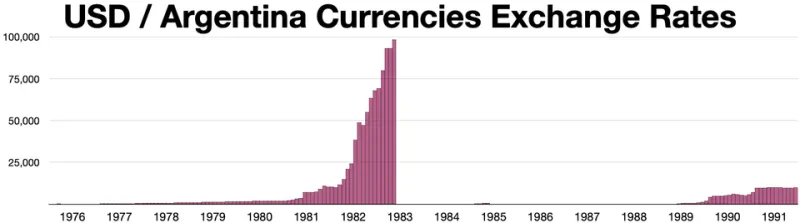
Currency volatility has emerged as one of the most disruptive yet underappreciated forces reshaping how US companies source goods internationally. From the Euro corridor to emerging market suppliers in Southeast Asia, fluctuating exchange rates are forcing supply chain leaders to rebuild strategies that once seemed airtight. This piece examines the mechanics of that pressure and offers a structured framework for navigating it.

Island Advantage: How the Caribbean Is Rewriting the Rules of US Nearshore Logistics

Island Advantage: How the Caribbean Is Rewriting the Rules of US Nearshore Logistics

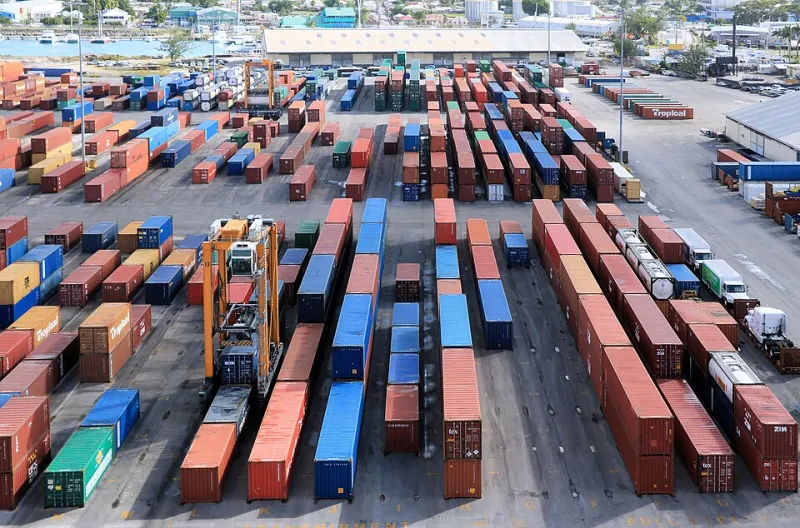
For decades, US companies defaulted to Asia for manufacturing and sourcing, absorbing long lead times and mounting geopolitical risk. A growing number of supply chain strategists are now turning their attention to the Caribbean—a region that offers tariff advantages, dramatically reduced transit times, and an accelerating wave of infrastructure investment. Jamaica, the Dominican Republic, and Trinidad and Tobago are emerging as the anchors of a nearshore strategy that is fundamentally reshaping

Closer Than You Think: How Mexico Is Quietly Outmaneuvering Europe as America's Logistics Partner of Choice

While European logistics hubs attract considerable attention from US supply chain planners, Mexico's geographic proximity, USMCA-driven cost advantages, and a new generation of industrial port infrastructure are making a compelling case that the most strategically valuable logistics partnership for American businesses may lie far closer to home. This analysis challenges the prevailing European-centric narrative and asks whether US manufacturers and e-commerce operators are systematically underva

When Cheap Becomes Costly: The True Price of Offshored Fulfillment and the Reshoring Reckoning

American businesses that once chased lower labor costs by moving fulfillment operations overseas are now confronting a more complicated financial reality. Beyond the obvious freight expenses, a cascade of hidden costs—from bloated inventory buffers to eroding customer loyalty—is prompting a quiet but significant reversal. This analysis examines the total cost of ownership in global logistics and offers a structured framework for determining when bringing operations home makes sound financial sen